Instructor Ed Jones has over 30 years of experience in theindustry, has the title of MasterWater Restorer, is an Institute ofInspection Cleaning andRestoration Certification (IICRC)-approved instructor, and hasserved on the S500-2021consensus body committee todevelop the most recent standard.
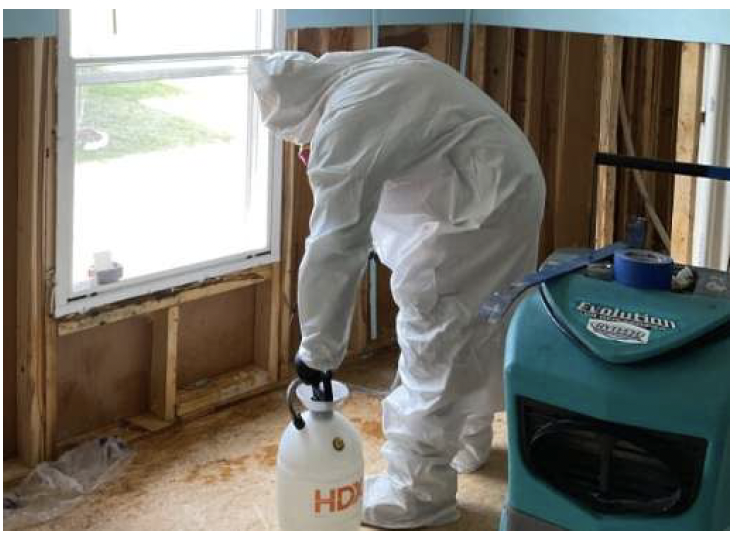
An antimicrobial is a substance that kills or inhibits the growth of microorganisms, whereas a biocide is any substance that kills living organisms. These two terms are typically used interchangeably in the water damage mitigation industry. In the past, most restoration contractors sprayed antimicrobials/biocides on EVERY water loss no matter what the category of water loss. The ANSI/IICRC S500-2021 states, "Not all water intrusions warrant the use of antimicrobials (biocides). It is recommended restorers evaluate whether antimicrobial (biocide) application is appropriate. When there is a Category 1 water intrusion that has not changed in Category, the use of antimicrobials (biocides) is generally not warranted."
The S500-2021 goes on to state, "restorers should:
■ Discuss potential risks and benefits with the customer, make available product information including the label and the SDS, and obtain a written informed consent with the customer’s signature before applying any antimicrobial (biocide). ■ Inquire about any pre-existing health conditions that might require special precautions. ■ Advise customers to remove occupants and animals from the product application site, particularly children and those with compromised health. ■ When antimicrobials (biocides) are used, document all relevant biocide application details."
Remember, antimicrobials/biocides are regulated by the Antimicrobial Division within the Office of Pesticide Programs of the USEPA and you need to be aware of all safety precautions to be taken when spraying chemicals in peoples’ homes.
So, in summary, antimicrobials/biocides are sprayed after demolition and cleaning on affected surfaces typically on categories 2 & 3 water losses. Follow label directions and be sure to obtain a signed consent form from your customer prior to application.
Contractor Newsletter
Sign up today to receive quarterly tips on best practices in home repair, growing your contracting business, and more.