Instructor Ed Jones has over 30 years of experience in theindustry, has the title of MasterWater Restorer, is an Institute ofInspection Cleaning andRestoration Certification (IICRC)-approved instructor, and hasserved on the S500-2021consensus body committee todevelop the most recent standard.
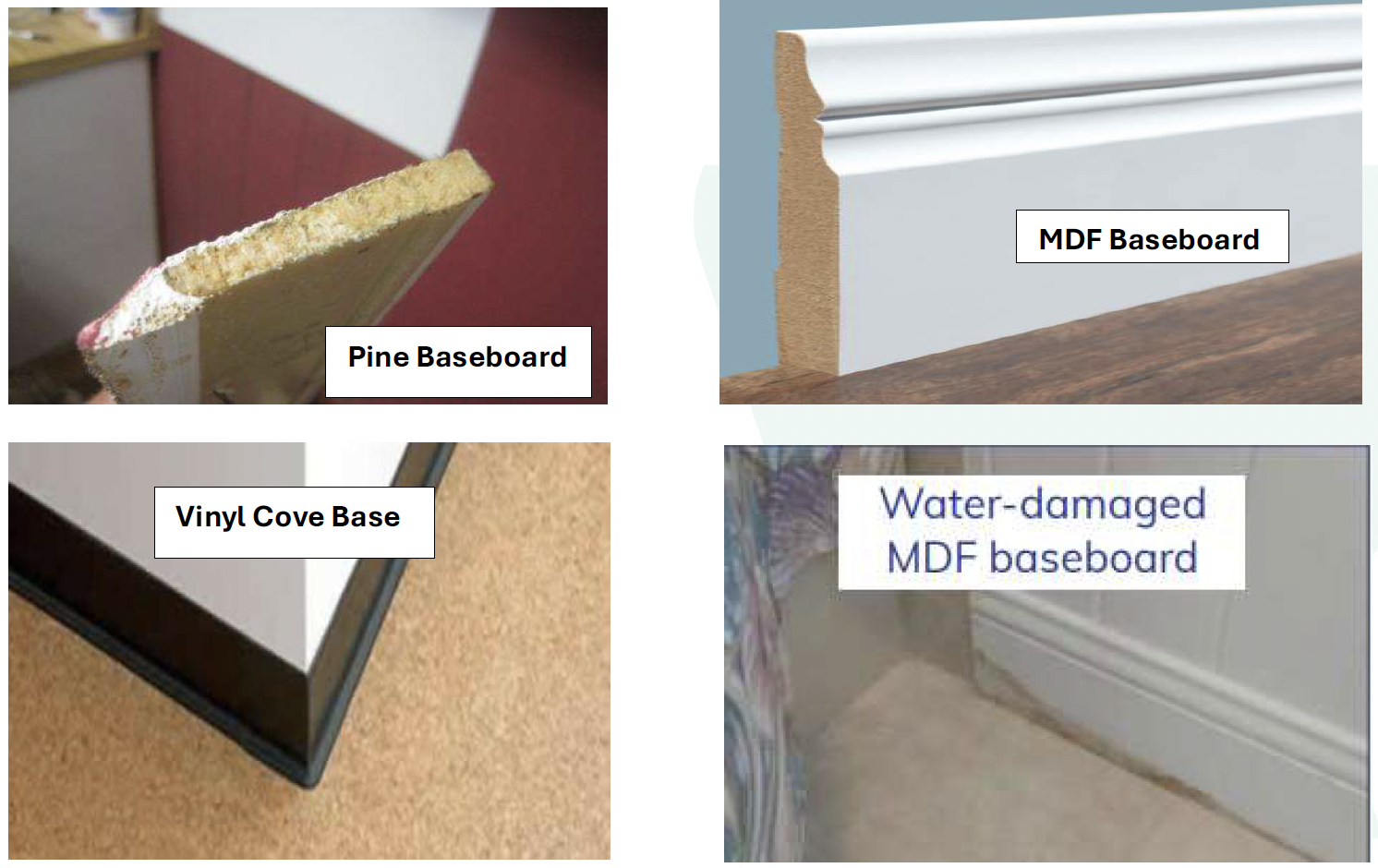
In architecture, a baseboard (also called skirting board, skirting, mopboard, floor molding, or base molding) is typically made out of wood, MDF (medium density fiberboard, which is a mix of sawdust, wood chips, and binders or glues), or vinyl covering the lowest part of an interior wall. Baseboards are generally 1/2" to 1" thick and 3" to 8" tall. Most residential baseboards are made out of pinewood or MDF. Pinewood is more durable and resistant to moisture than MDF for MDF can stain or swell easily if left in contact with moisture for any significant length of time. If baseboards are MDF and they are stained and/or swollen from a water loss event, take photos of the baseboards and recommend removal (see photo bottom-right below). If the baseboards are made of real wood, then they are generally restorable, per the ANSI/IICRC S500–2021 Standard for Professional Water Damage Restoration Appendix A, even when affected by categories 1, 2, or 3 water—yes, even category 3! (page 167 under Trim Work in Appendix A) When affected with category 3 water you will need to carefully remove the baseboard to be able to remove the affected drywall and to clean the baseboard and the sill plate properly. Then the cleaned baseboard can be reinstalled after drying, during the reconstruction phase.
When affected with categories 1 or 2 water, real wood baseboards & drywall can generally be dried in place without removing them unless there is a vapor barrier preventing drying inside the wall assembly or blown insulation has packed down and the wall needs opened up to remove wet insulation. Remember, when water migrates across the floor and wicks up into the drywall, the drywall can generally be dried in place, even on exterior walls if fiberglass batt insulation installed behind drywall. *See Getting EDucated Article on "Drying ALL Drywall in Place on Categories 1 & 2 Water Losses"
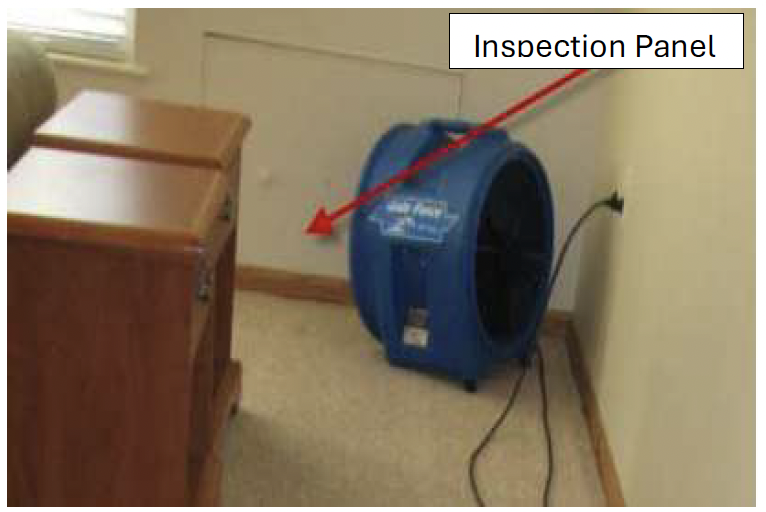
At Accuserve's IICRC-approved Applied Structural Drying (ASD) flood house built on the Clark State College campus in Springfield, OH, we dry the drywall walls & the baseboards (1/2" drywall with pine baseboards and fiberglass batt insulation inside exterior walls) in place every time! We flood the house with category 1 water 24-36 hours ahead of the class to give the water time to penetrate inside the walls and wick up the drywall. We have removable inspection panels in each room, so after drying is complete, we can prove to the students inside the wall and behind the baseboards is dry with no problems! The fiberglass batt insulation doesn't get wet enough to require flood cuts when the water wicks up into it and there is no vapor barrier! You can read about our Structural Drying Experiment in R&R Magazine, where we proved you can dry inside exterior wall cavities (sill plates, wood framing, fiberglass batt insulation, gypsum board, and baseboard) *R&R Magazine Article January 31, 2017 - An Experiment Concerning the Effectiveness of a Structural Drying Approach | 2017-02-01 | Restoration & Remediation Magazine
We do have a bedroom at our flood house with vinyl wallpaper and hardwood paneling installed on an exterior wall to show the students that there are situations when the baseboard may need removed to drill holes in the drywall to inject air into the wall assembly to dry behind a vapor barrier.