Instructor Ed Jones has over 30 years of experience in theindustry, has the title of MasterWater Restorer, is an Institute ofInspection Cleaning andRestoration Certification (IICRC)-approved instructor, and hasserved on the S500-2021consensus body committee todevelop the most recent standard.
The ANSI/IICRC S500-2021 Standard for Professional Water Damage Restoration states demolition and cleaning should occur prior to placing air movement on affected materials in order to minimize aerosolization of potential contaminants. *See excerpt below:
Prior to implementing the restorative drying effort (e.g., rapid air movement), restorers should evaluate then clean materials within the work area as needed. Where necessary, restorers should clean visible debris, dust, and soil from materials and surfaces to reduce the amount of soil or particulates that can become aerosolized. Restorers should employ cleaning methods that minimize aerosolizing particulates.
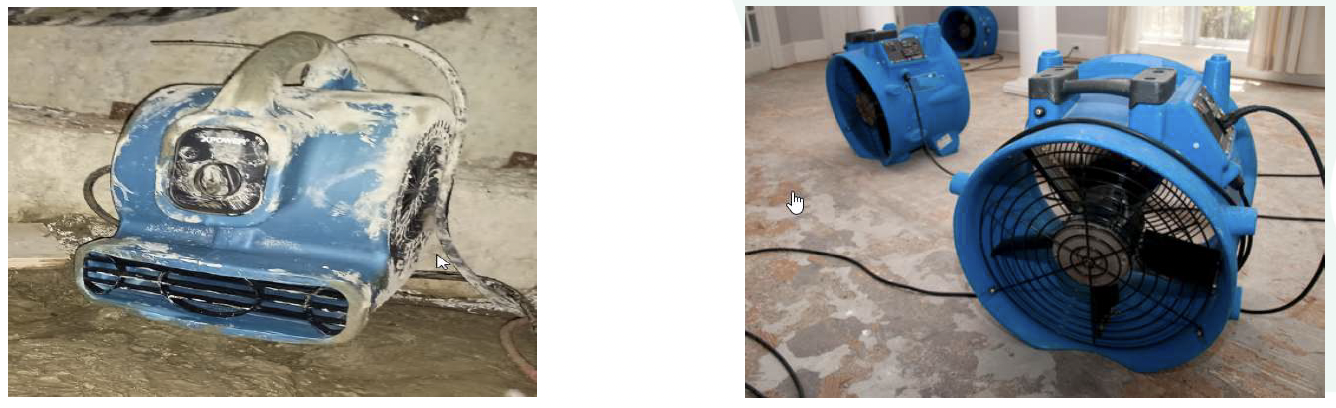
So, when decontamination of air movers is included in the mitigation invoice I push back, unless photos can be provided that show equipment that has been significantly contaminated, for per the standard, the restorer shouldn’t place air movers until AFTER demolition and cleaning has been completed, so why would an air mover need decontamination? The air movers are sitting on a clean surface blowing air across materials that have been cleaned and disinfected. Of course, an exception would be when air movers are placed in a muddy crawlspace and photos can be provided to show they need extra cleaning before putting them back in service. Dehumidifiers and air filtration devices (AFDs) are more likely to need cleaning , when placed on a contaminated water loss, because they may need to be placed before demolition and cleaning have been completed. I still ask for photos to determine the level of contamination that would require more than just wiping off your equipment after each job, which is not normally an extra charge on a water damage mitigation invoice in today’s industry.
The Xactimate description for decontamination per piece of equipment states, "Includes: Charge for wiping down equipment, germicide, and labor," and references the IICRC S500 5th edition to wash/wipe down contaminated equipment. In many locations this can range from $40.-$50.+ per piece of equipment, which would indicate it must require lots of detailed cleaning. I've seen charges to wipe down a tension post for $52. each and I told the project manager that my lawyer is less expensive than that, next time let me send him out there to wipe it down. So, I think there does need to be some logic and common sense that allows for payment of services contingent upon the actual work performed, meaning not paying as much to wipe down a tension post or an air mover than it would to wipe down an XXL dehumidifier or 100' of 2" vacuum hose.
In summary, I teach my students to treat every water loss like it was their own home and family affected so they would never take shortcuts or skip steps, with the caveat you need to mitigate the damage in the most cost effective manner possible, while still following industry standards. When billing out services that are many times taken advantage of in this industry due to an insurance carrier is paying for those services, you want to earn the reputation of billing fairly and providing the best documentation to support your charges. Provide good photos to show why your equipment needs extra charges for cleaning and disinfecting becausee it was significantly contaminated and charge appropriately for the amount of work it would take to clean and disinfectant adequately. Remember, you shouldn't place air movers to create airflow across all wet surfaces until after demoltion and cleaning has been completed and if cleaned properly this would not require any decontamination of air movers.
Hope that helps!
Contractor Newsletter
Sign up today to receive quarterly tips on best practices in home repair, growing your contracting business, and more.