Instructor Ed Jones has over 30 years of experience in theindustry, has the title of MasterWater Restorer, is an Institute ofInspection Cleaning andRestoration Certification (IICRC)-approved instructor, and hasserved on the S500-2021consensus body committee todevelop the most recent standard.
Besides being an IICRC approved instructor for WRT & ASD certifications, I sometimes serve as an expert witness when there are allegations of incomplete drying or cross-contamination of mold spores, asbestos fibers, or lead dust.
It is critical that the restorer closely follow the ANSI/IICRC S500-2021 Standard for Professional Water Damage Restoration when it comes to minimizing air movement until demolition & cleaning can be completed.
“Restorers should prevent the spread of contaminants into areas known or believed to be uncontaminated.” This includes, in grossly contaminated environments, restorers shall implement procedures to minimize the spread of contaminants. This can be accomplished by isolating contaminated areas, erecting containment, maintaining negative pressure, and employing appropriate work practices.
See tips below on how to avoid cross-contaminating unaffected areas:
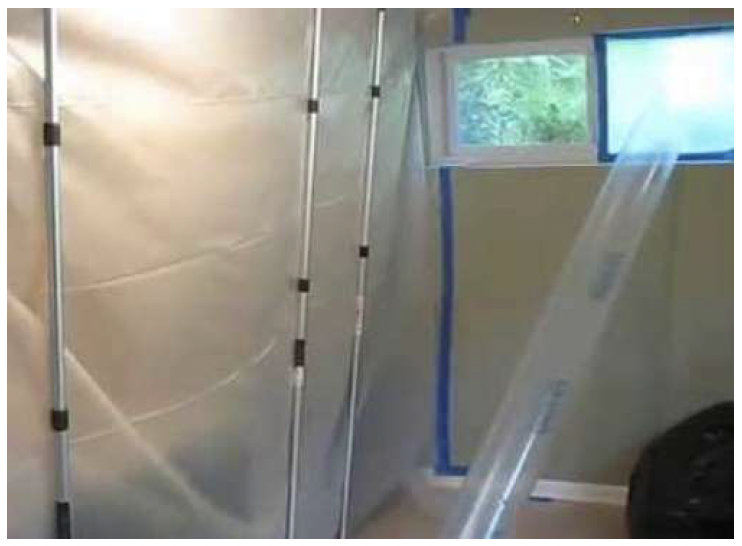
Containment - an engineering control used to isolate an area for drying or to minimize cross-contamination from affected to unaffected areas by airborne contaminants, foot traffic, or material handling. Containment systems normally consist of 6-mil polyethylene sheeting, often in combination with air pressure differentials, to prevent cross-contamination.
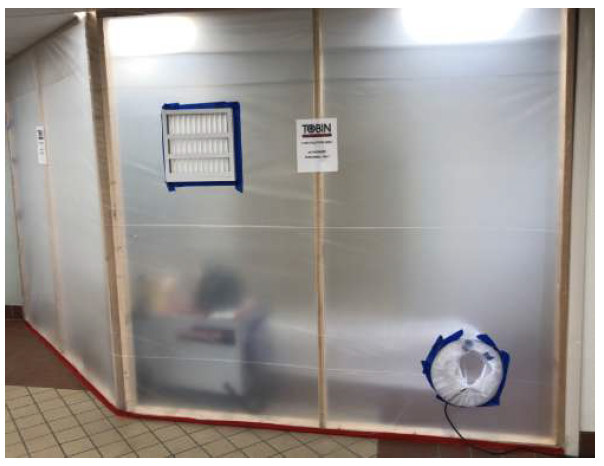
Negative Pressure - a condition that exists in a building when less air is supplied to a space than is exhausted from that space, so that the air pressure within that space is less than that in surrounding areas. This can be achieved in occupied spaces by ducting your air filtration device out of the chamber. Take a photo of this for your records or better yet include daily manometer readings to prove negative pressure has been achieved in the affected areas. * Don’t forget about make-up air
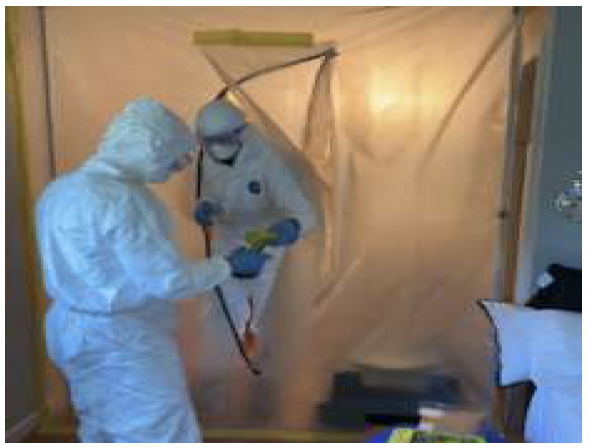
Personal Protection Equipment (PPE)– S500-2021 states this can include respirator; eye protection; disposable coveralls including hood and booties; foot protection, hand protection; head protection; and hearing protection. It is critical all technicians working in potentially contaminated environments be trained to don, doff, clean & maintain their PPE.
Use of air filtration devices (AFDs) - AFDs consist of a motorized fan, filter(s), and housing, designed to remove airborne contaminants from the process air stream. AFDs typically have a series of filters consisting of pre-filter(s) and a HEPA filter. Also referred to as an air scrubber or negative air machine (NAM) depending upon the application.
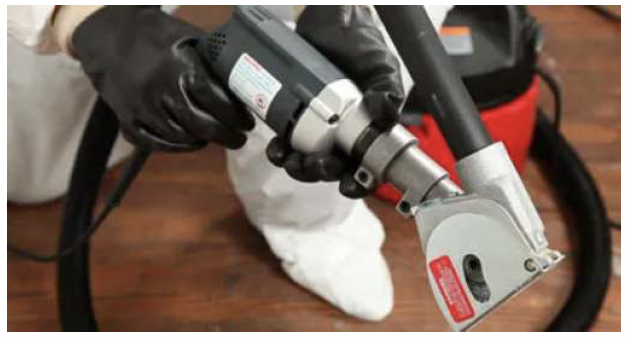
Utilize dust suppression devices - It is recommended that power tools being used to cut or remove materials, have dust suppression attachments or be attached to a HEPA filtered vacuum to capture and suppress aerosolization of dust and particulates.
I recommend placing containment on EVERY water loss during mitigation. Of course, containment could be just shutting a door, if not a contaminated water loss. Don’t forget to identify all air supply and return vents if creating any dust or if it is contaminated water loss. Take photos of your safety precautions showing your containment, AFD setup under negative air pressure, and technicians wearing PPE. Protect unaffected areas and take photos showing clean & organized work areas upon completion of demolition and cleaning.
In crawlspaces you can place negative air pressure with just a centrifugal air mover blowing out a crawlspace vent with lay flat ducting. Of course, take photos to show your setup.
Contractor Newsletter
Sign up today to receive quarterly tips on best practices in home repair, growing your contracting business, and more.