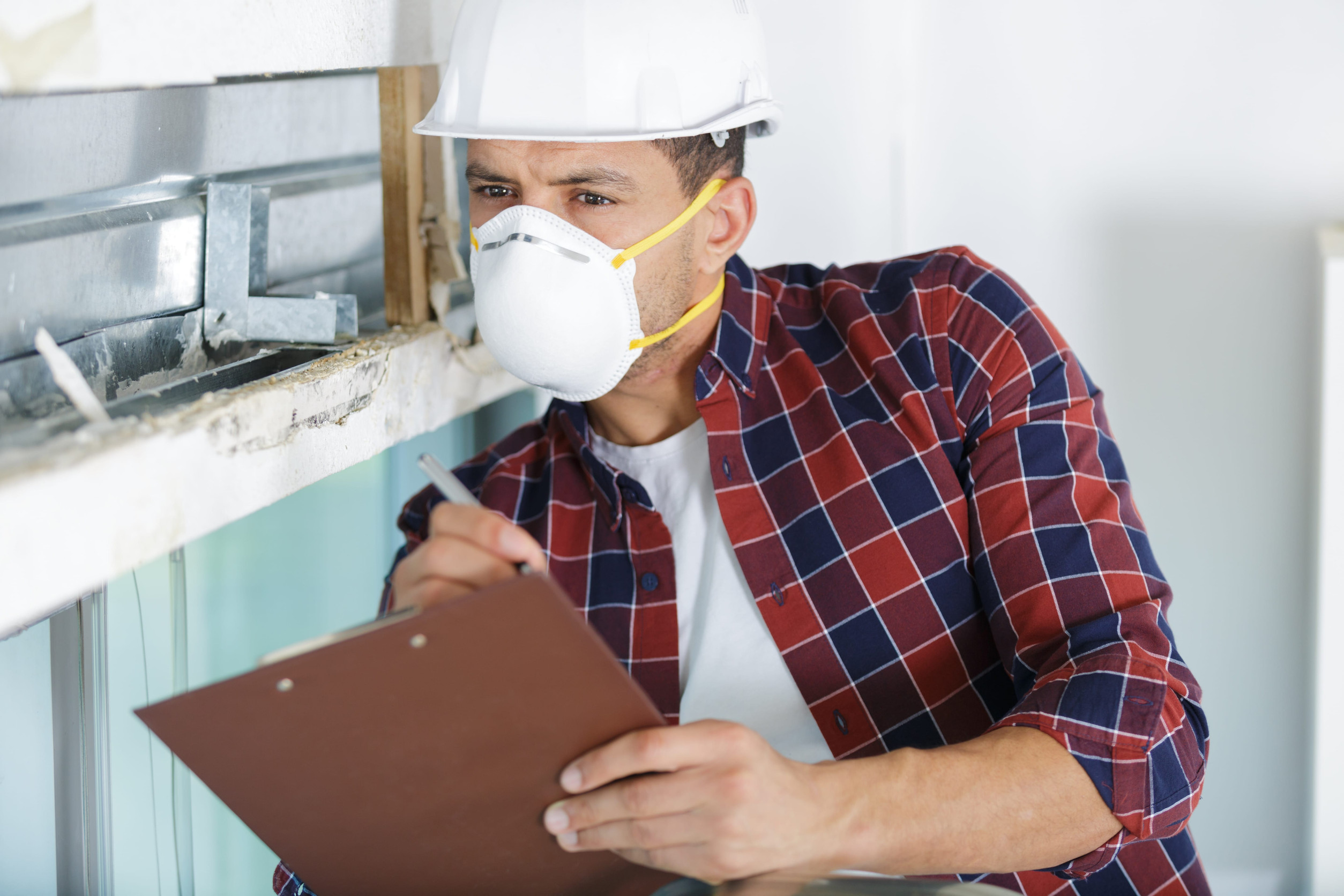
Did you know there is no federal standard for how many mold spores should be in your home compared to the outside?
Because mold is ubiquitous, meaning it is everywhere on this planet, it is not hard to find mold when you ask an Indoor Environmental Professional, also known as an IEP, to inspect for mold.
Too many times, I have seen an adjuster or homeowner ask for a mold inspection. Then, when the report comes back, there are elevated mold spore counts per cubic meter of air compared to outside air, and now the mitigation restorer is in trouble for potentially causing elevated mold spores.
It is not hard to find mold when it is everywhere.
Air Samples Are Only a Snapshot
It is important to remember that an air sample is just a “snapshot” of what might be going on in your home.
The way I explain it to my students is this:
If you go outside and take a photo of the sky, and when you look at your photo it has a flock of geese in it, does that mean we have a goose problem?
No.
It just means you happened to catch a flock of geese in your photo.
The same concept applies when taking air samples in a home. You could get a completely different result just around the corner depending on several conditions, such as:
- Negative air pressure drawing spores from drain lines
- Spores being pulled from HVAC system supply ducts
- More airflow in one particular area
- The amount and type of mold spores present at that exact moment
How Mold Air Sampling Works
Mold air sampling typically involves collection, laboratory analysis, and comparison to outdoor air.
Collection
A specialized pump typically pulls 15 liters per minute, also called LPM, of air through a sticky cassette or petri dish.
Indoors, this is usually done over a period of 5 minutes.
Outdoors, it is typically done over 10 minutes.
Laboratory Analysis
A lab technician looks at the trapped particles under a microscope to count the number of spores and identify the specific mold types, also known as genera.
The lab only counts part of the slide and then extrapolates the total amount.
This is where you may see terms such as:
- Raw count
- Spores per cubic meter of air
Outdoor Comparison
The lab compares indoor spore counts and types against an outdoor control sample.
Because mold spores naturally float in from outside, an indoor count that is much higher than the outdoor baseline can signal a potential indoor growth problem.
The presence of specific types of mold indoors that are not found outside can also indicate a possible indoor mold issue.
Mold Testing Is an Art and a Science
Part of the IEP’s job is to help develop a mold testing air quality sampling plan specific to the project.
The IEP should also help interpret the lab results in light of what was discovered during the visual inspection of the home. Mold testing has been described as both “an art and a science,” and I agree with that sentiment.
Since mold is not a federally regulated contaminant, the industry can feel like the wild, wild west in terms of who tests, what they test for, and how results are interpreted.
For a customer, that should be concerning because anyone may call themselves a mold inspector without having adequate training or professional credentials to demonstrate competence.
Common Types of Mold Sampling
There are two common types of mold sampling discussed in inspection reports.
Air Sampling
Air sampling is the most common form of sampling used to assess the level of mold.
Sampling is conducted inside and outside, and the results are compared. Air sampling may often provide positive identification of non-visible mold. Accuserves Getting EDucated by …
Surface Samples
Surface samples measure the amount of mold spores deposited on indoor surfaces.
Examples include:
- Tape samples
- Dust samples
- Swab samples
Surface samples can help identify the type of mold at a specific point of contact, but they only tell you what is present at that specific tested area.
They do not necessarily represent the overall conditions of the entire building.
Indoor vs. Outdoor Mold Counts
When reviewing mold inspection results, the difference between indoor and outdoor samples needs to be significant.
A small difference does not automatically mean there is a major indoor mold problem.
The report should be interpreted alongside:
- Visual inspection findings
- Moisture readings
- Building conditions
- HVAC conditions
- Sampling locations
- Outdoor control samples
- Whether visible mold was found
- Whether materials were wet
What an IEP Mold Inspection Report Should Include
It is important that the Indoor Environmental Professional provide clear details in the inspection report.
The report should include:
1. Objectives of Testing
The report should clearly state why testing was performed and what questions the inspection was intended to answer.
2. Types of Testing and Sampling Strategy
The IEP should explain what types of testing were performed and why those methods were selected.
This may include air sampling, surface sampling, or both.
3. Photos of Sample Locations
The report should include photos showing where samples were taken.
This applies to both air and surface samples.
4. Visual Inspection Findings
The report should include a visual inspection with photos showing:
- Any visible mold
- How much mold was observed
- What materials were affected
- What rooms were involved
5. Sketch of Sample Locations
The report should include a sketch showing where samples were taken.
This should include:
- Air sample locations
- Surface sample locations
- Areas where mold remediation may be recommended
- Any wet areas
6. Thermo-Hygrometer Readings
The IEP should provide photos of thermo-hygrometer readings showing temperature and relative humidity.
These should include:
- Outside
- Inside affected areas
- Inside unaffected areas
- HVAC system
The report should also note whether the HVAC system was functional and running, including whether it was heating or cooling.
7. Moisture Content Readings
The report should include photos of moisture content readings using a penetrating moisture meter whenever possible.
It should also note whether materials have acceptable moisture content levels or not.
8. Photos Showing Conditions of the Home
The report should include photos showing the conditions of the home.
This helps determine whether there are unrelated moisture issues in the home or not.
9. Outdoor Samples
If air samples are being taken to compare to outdoor samples, then a minimum of two outdoor samples should be taken.
These should be taken on the windward and leeward sides of the building, while noting wind speed and direction.
10. Summary and Recommendations
The report should include a summary with details on remediation, if needed.
It should also address whether someone was negligent if there are allegations of incomplete drying or causing mold.
Choose an Independent, Properly Credentialed IEP
It is critical to choose an independent IEP with proper credentials.
Relevant credentials may include:
- ACAC, American Council for Accredited Certification
- CRMI, Council-certified Residential Mold Inspector
- IICRC Applied Microbial Remediation Technician, or AMRT
- IICRC Water Restoration Technician, or WRT
- IICRC Applied Structural Drying, or ASD
ACAC offers CESB-accredited credentials such as the CRMI, which requires verifiable field experience, rigorous exams, and ongoing recertification. Accuserves Getting EDucated by …
The IEP Should Be Independent
Before the inspection, go over the objectives and ask for the inspection details listed above.
After the inspection, debrief with the IEP and review the report, including the recommendations.
The IEP must be independent from the mitigation or remediation contractor and should be hired by someone unbiased. Accuserves Getting EDucated by …
Final Thoughts
Mold inspection reports can be confusing if you only look at spore counts.
Because mold is everywhere, an inspection report should not be interpreted without understanding the sampling plan, inspection findings, moisture conditions, HVAC conditions, indoor and outdoor comparisons, and the credentials of the person performing the inspection.
Choose an independent, properly credentialed IEP, review the objectives before the inspection, and debrief after the report is completed.
For remediation practices and procedures, follow the IICRC S520 Mold Remediation Standard.