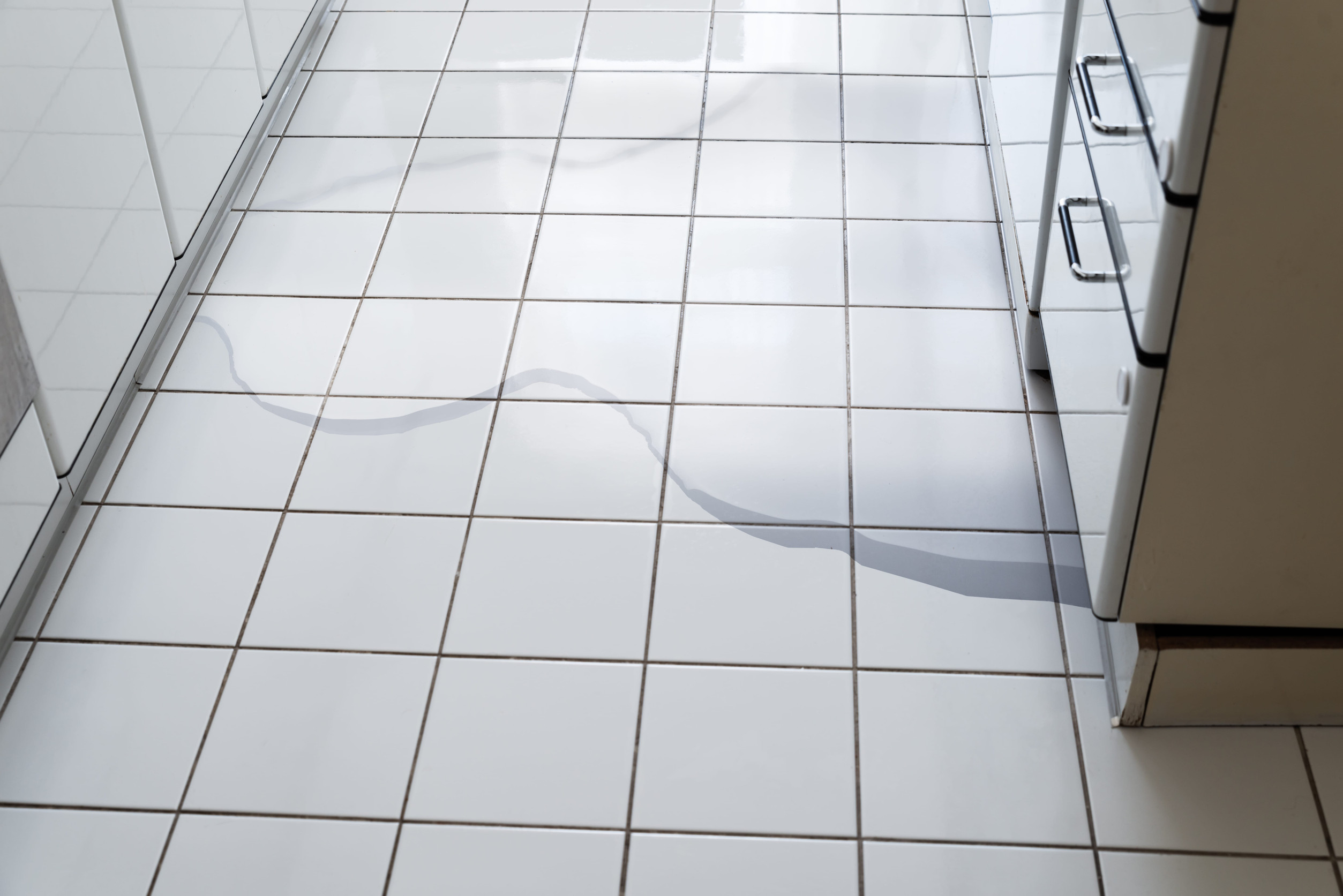
Wood and stone have been used in the construction of homes since prehistoric times, but wood needs a little more attention because it is more susceptible to moisture issues than stone.
Wood naturally expands and contracts depending on ambient air conditions.
Have you ever had a wood door or drawer stick on a humid day, but shut just fine on a dry day?
Moisture is continually going into and out of wood. Because wood is an organic food source for mold, restorers need to make sure it gets dried quickly and properly when it gets wet.
Pin-Type Meter vs. Pinless Moisture Meter
When drying hardwood flooring, you have two options for taking moisture content readings:
- Pin-type meter
- Pinless meter
Both tools can be useful, but they do not do the same thing.
What a Pinless Moisture Meter Does
A pinless, non-invasive, or non-penetrating moisture meter does not measure actual moisture content.
Instead, it measures moisture presence within its depth through conductance measurement.
This means a pinless meter can be helpful to scan the material and identify whether it might be wet. However, it is not a conclusive way to show that the material is wet or dry.
A pinless meter does not give you true moisture content.
Why Pin-Type Meters Are Important
A pin-type meter can provide a conclusive moisture content reading.
This allows the restorer to measure the moisture content and determine whether the material was dried to a state that will inhibit microbial growth. This is critical in the restoration industry because it helps avoid allegations of incomplete drying or causing mold.
Pin-type, invasive, or penetrating moisture meters are best because their readings provide a quantitative measurement. That means they tell you the moisture content as a percentage in the wood being tested.
For example, 10% moisture content, also called MC, means that 10% of the wood’s weight is water.
With these readings, restorers have a much better understanding of whether the wood or other material being tested has excessive moisture or is within an acceptable range.
Always Photograph Final Moisture Content Readings
Always take photos of final moisture content readings to document that drying targets were reached.
There is a misconception that you should put holes in the hardwood planks to obtain accurate readings, but this is not true.
You simply need to touch the pins to the surface of the wood.
At worst, the pins should leave barely noticeable indents on the wood surface.
Take Multiple Readings
You should take multiple readings to get the most accurate picture of the wood’s moisture content.
A good recommendation is to record one reading for every 50 square feet of hardwood floor.
Each 50-square-foot area should be shown on a moisture map as a quadrant, such as:
- Quadrant A
- Quadrant B
- Quadrant C
- Quadrant D
This makes it easier for the customer and other third parties to identify where readings were taken and confirm that the floor was dried properly.
Use a Moisture Map
A moisture map helps show where moisture content readings were taken.
The map should clearly identify the areas being monitored and correspond with the readings in the drying record.
This creates a stronger drying file because it connects the readings, locations, and photos together in a way that is easier to understand.
Check the Subfloor When Possible
Do not forget to take photos of the final readings of the subfloor from below, if possible.
This helps show that the subfloor under the hardwood planks is within 4% of the hardwood planks, as long as the material is less than 20% moisture content.
At 20% moisture content or above, destructive microbial growth can occur on wood materials.
It is best to target around 15% moisture content to be safe because non-destructive microbial growth can occur from 17% to 19% on wood.
The species of the wood and the temperature of the wood can also influence the moisture content to some degree.
Best Practice for Hardwood Floor Moisture Readings
Use the non-invasive or non-penetrating moisture meter to scan the hardwood floor and determine whether it might be wet.
Then use an invasive or penetrating moisture meter to provide accurate moisture readings and confirm that the hardwood planks have been dried to a state that would inhibit the growth of mold.
Only touch the pins to the surface of the wood, record the readings on a moisture map, and clearly show where each reading was taken.
Finally, take photos of your final penetrating moisture content readings to prove that you left the wood at an acceptable moisture level.
Final Thoughts
Hardwood flooring can be dried properly when restorers use the right tools, take accurate readings, and document the process clearly.
A pinless meter is useful for scanning, but a pin-type meter provides the moisture content readings needed to support the drying file.
By using moisture maps, taking multiple readings, checking the subfloor when possible, and photographing final readings, restorers can better prove that hardwood flooring was dried to an acceptable level and left in a condition that inhibits microbial growth.