Instructor Ed Jones has over 30 years of experience in theindustry, has the title of MasterWater Restorer, is an Institute ofInspection Cleaning andRestoration Certification (IICRC)-approved instructor, and hasserved on the S500-2021consensus body committee todevelop the most recent standard.
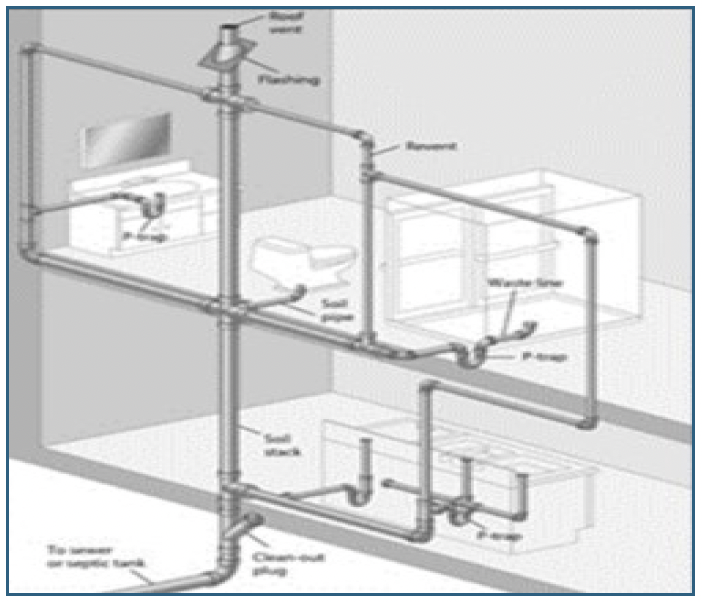
Water runs down the sink drain into a P-trap (so called because it’s shaped like the letter), which fills up with water to prevent sewer gases and odors from getting into the house through the pipe. This water gets refreshed whenever more water runs through it. A drainpipe attached to the P-trap goes into an opening in the wall. Behind the wall (where you can’t see), a vent line and drainpipe lead to a soil stack, which is the control center of the wastewater system. Drainpipes take the wastewater to the soil stack; through the stack, sewer gases are carried up to the roof through vent lines.
All the faucets and water appliances in a house use this same system of drains, pipes, and vents. All the waste lines have a clean out, which is a Y-shaped fitting that’s accessible so you can clean out any serious obstructions within the system. See the diagram below:
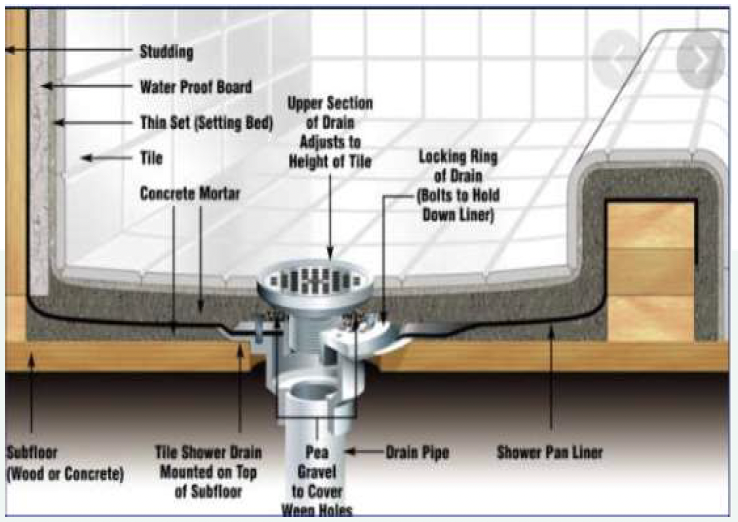
In the case of a shower pan leak, the water generally leaks from the drain connection right under the shower pan. This happens over a period of time so is generally considered a category 3 water loss, if there is evidence of dark staining and/or visible mold.
Also, remember drains typically only leak when water is running through them, or they are backed up. Tile shower pans are made for the water to pass through the tile and grout to the shower pan liner which directs the water down the drain. See the shower pan diagram below:
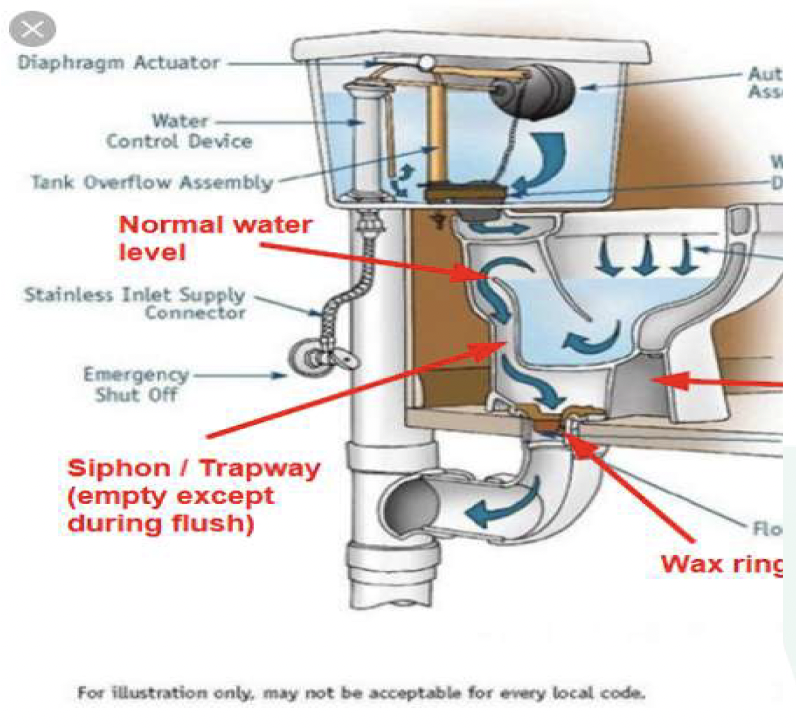
Water leaking or backing up from a drain line into the home is typically considered category 3 water, regardless of content or color. The S500–2021 excerpt states, “wasteline backlows that originate from beyond the trap regardless of visible content or color” as one example of category 3 water. The issue is the water that runs through or backs up from a drain line could contain pathogenic, toxigenic, or other harmful agents that could pose a signiicant health risk to humans. Water overflowing from a toilet bowl from a soft blockage in the trap is typically a category 2, unless there is significant evidence of feces. *Important to provide photos to show evidence of significant fecal contamination to warrant category 3 determination” The S500–2021 excerpt states, “overflows from toilet bowls from the room side of the trap with some urine, but no feces” as one example of category 2 water.
See the toilet diagram below.
Category 3 water is grossly contaminated and can contain pathogenic, toxigenic, or other harmful agents and can cause significant adverse reactions to humans if contacted or consumed. Independent testing may be necessary to identify category of water if there is a dispute. Contact all materially interested parties to agree upon a sampling strategy.
Contractor Newsletter
Sign up today to receive quarterly tips on best practices in home repair, growing your contracting business, and more.